Posts

Stardust By Niel Gaiman

Image
Stardust is a book written by Neil Gaiman. The book is about a person named Tristran Thorn and his quest into the land of Faerie to find and bring back a fallen star for a girl in the Town of Wall. During his pursuit of this star, he encounters many other people, witches, and princes that are also in pursuit of this star. This book is another take on the classic fairytale storyline, but Gaiman is able to use the standard fairytale plot and story lines to create a well written fantasy novel. I enjoyed the language that Gaiman uses in Stardust and the vivid imagery that is present. He is very descriptive of all the characters which makes the world come alive and the reader is able to create a connection with the many characters in the book. I highly recommend this book to people who like classic fairytales or well written stories with a good ending. I recommend this book because it is a great take on the old fairytale and takes the reader on a journey and ends with a nice feeling i...

The second final Post of the YEar (Last of Gatsby)

This school year we read many books and I have enjoyed reading many of them. My favorite book to read this year would have to be the Great Gatsby though it would be easy for any of the other book to reach this place. I enjoyed reading the Great Gatsby because it was a great book and though it was short, it had much more meaning behind every word that was written. My least favorite book would have to be the Merchant of Venice only because I have to pick a least favorite. This book did not appeal to me as much  as the other books because I do not really like this style of writing. I enjoyed reading about Frederick Douglass because I like non fiction books and this particular one was short, but full of facts and was captivating to the very end. The Odyssey was fun for me to read because I enjoyed and liked reading about the Greek Myths.

The Colorful Gatsby

Image
The Great Gatsby is filled with imagery and created a world that played with the readers senses and emotions. F. Scott Fitzgerald filled this book with color and each color was specifically chosen and placed in a very eloquent manner. The meaning and symbolism behind the color that is present in the book can be hard to pick up, but only shows how great the writer and the novel really are. The placement of the color makes me wonder how he planned his writing and what was his writing process. Daisy and Jordan always had the presence of white, symbolizing the purity and class they had, shows the consistency that Fitzgerald maintained. The book is only 180 pages, but can be compared to a picture where each scene that is described and every word that is placed should be many more words than what is there.

Climax of Gatsby: Take 2

Is the climax the hotel scene when Tom and Gatsby argue, or is it when Gatsby meets Daisy at Nick's house? What central conflict or conflicts are being addressed in the climax, and how is this the turning point of the narrative (story)? Use textual evidence to back up your claims. The climax of the Great Gatsby varies between reader to reader. I think the climax of the story is the scene when all of the main characters of the book are at the hotel and Tom and Gatsby argue. This is the climax because it is the most heated part of the book and everyone comes together in this scene. This scene also foreshadows that Daisy will have to make a choice between Gatsby or Tom and that Gatsby's ultimate dream has not happened as he would have liked. Daisy said that she would still has or had some feelings for Tom, which was not what Gatsby wanted.  "I did love him once--but I loved you too." Gatsby wanted her to proclaim her love for solely him and revoke all proclamat...

The Climax of Gatsby

Image
The climax of the Great Gatsby is when Gatsby is shot. This is the climax because it is at this moment we are able to determine the resolution as Daisy stays with Tom. "... she and Tom had gone away early that afternoon, and taken baggage with them." The central conflict of the story of Gatsby's quest for Daisy is now over once he is shot since their is no longer a decision to be made by her. It could be debated whether or not the climax is before this event, but this conflict remains open ended without a clear resolution until Gatsby is shot. This is the climax of the story as the central conflict comes to an end shortly after he is shot, mentioned above with Daisy disappearing with Tom, and everything else comes to a close with Gatsby's funeral. It seems that the climax of The Great Gatsby has been disputed and has been subject to debates from between who reads the book. This is what I believe the climax is in this story and would like to know your thou...

The Great Gatsby: They Meet

In chapter 5, when Daisy and Gatsby meet, how is weather used to create mood, and what mood(s) is created? When Daisy and Gatsby first meet it is raining and with this weather Gatsby is classically nervous and depressed waiting for Daisy. When Daisy arrives and they go inside and begin talking and reminiscing, the sun came out. This reflected how they were feeling happy since they missed each other. The weather amplified these moods, as the moods that the characters felt are classically the same moods that occur when that kind of weather occurs. For instance rain occurs when people feel sad, or depressed. This was exactly how Gatsby was feeling when it was raining. The clearing of the rain and sunshine showed that the previous feelings were going away and that happiness would come. This kind of correlation between weather and mood may seem cliched now, but I wonder if it was as overused then as it now.

The Great Gatsby: Valley of Ashes

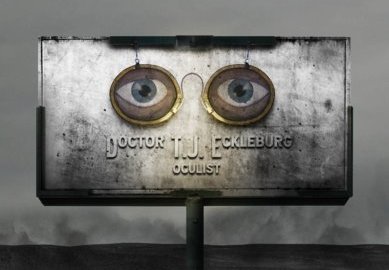
Image
In chapter 2 we are introduced to "the valley of ashes," a place between the Eggs and New York City. "The eyes of Dr. T.J. Eckleburg" watches over this desolate place. What are the eyes of Dr. T.J. Eckleberg and what do you think that these eyes and the valley of ashes represent? Use textual evidence to support your position. "... stir up an impenetrable cloud, which screens their obscure operations from your sight. But above the gray land and the spasms of bleak dust which drift endlessly over it, you perceive, after a moment, the eyes of Doctor T. J. Eckleburg."  The eyes that are mentioned in chapter two, symbolize that there are always someone looking or watching at you and your actions despite the black smog that you believe hides and protects you. The people in the valley believe that they're wrongdoings and shady actions are hidden, this can be seen as Tom has his mistress, Myrtle, in this valley and goes on with his life as if no one c...

Othello

Describe the characteristics of the type of play that you are reading (history, tragedy, or comedy). How does your play conform to these characteristics. Does it differ? If so, in what way? Othello is one of Shakespeare's tragedy plays. The characteristics of a tragedy are that they are usually sadder and have more tragic tones in the play. The most defining characteristic of a tragedy is the ending. Othello can be easily found to be a tragedy because their are multiple deaths of the main characters. The villain of the story, Iago, get his comeuppance. This story follows the regular rules of a Shakespearean tragedy. Since it follows the regular rules without straying away, this play can and has been used as an example of Shakespearean tragedy. 

Merchant of Venice Response Project

Image
For my response project to Merchant of Venice I joined a group of seven people to create a film. The film was about Antisemitism in the modern world. This was the film we created. I am overall happy with the project, but do think that it could have been better. Our group, being probably 2-3 people too many, had troubles getting everyone together to communicate about the project. We were still able to create a decent film. I would certainly do this type of project again, but only choose a more selected group. I still had a great time creating this film for my response project.

The Merchant of Venice

The Merchant of Venice contained numerous material that would be considered against common belief in today's world. This play has left the world thinking that Shakespeare may have been the greatest writer in the English language, but also still bound the society around him. The antagonizing of Jews was prevalent during that age and is also very present in the book. The main conflict is between a Jewish man and a Christian. Shylock, the name of the Jewish man, fits and portrays many of the stereotypes that we think of to be Jewish. This could be to the times, because Shakespeare thought Jews were like that, for the audience so that they know that he was Jewish, or a mixture of all of these ideas or more. This has led to a debate on whether or not the bard himself was anti-Semitic. Shylock's speech that tries to ask what is the difference between a Jew and a Christian and why they are seen differently when they are the same is used to help in the argument that Shakespeare is not....

Who has the upperhand?

At the end of the play, social order should be restored. One facet of this in the 16th century is men having dominance over women. Is this true in this play? Who has the upper-hand, and why? Provide textual evidence. For the first few acts it is sectioned off between the Green World which is Belmont where the social order is messed up or different from the normal social order present in Venice. This changes when the Green World invades the Normal World when Portia and Nerissa disguise themselves as a law doctor and clerk and deceive the men into giving up their rings and with it their vows of love.  " BASSANIO Go, Gratiano, run and overtake him. Give him the ring and bring him, if thou canst, Unto Antonio’s house. Away, make haste. " At the end of the play, everything comes to an end and Portia and Nerissa tell their lovers of the deception and they give back their leadership to the men, thus social order is restored. This back to normality is assumed because it is ...

Merchant of Venice

According to the 5-act play structure, the climax or turning point of the play should have happened in the third act. Did it happen? If so, what was it and what central conflict was addressed? If not, discuss the central conflict that has not yet been resolved. The central conflict of the play is the bond between Shylock and Antonio. This conflict has not been resolved yet, but the entire play has been leading up to its end. The sub-conflinct of Portia's spouse has been resolved and this resolution is part of the central conflicts resolution as Bassanio now has more than enough money to bail out Antonio. Shylock is still pursuing payment for the bond from Antonio and wants his pound of flesh as payment to be his heart. In the next coming acts this conflict will be resolved as Bassanio is rushing back to save his friend. This conflict has been interesting and has kept me involved and actively reading/listening to see what happens next. I am looking f...

Shakespeare: Merchant of Venice

What do you think of Antonio's behavior toward Shylock? Why do you think Antonio behaves the way he does? Antonio treats Shylock very poorly based on their differences in religion. His actions would certainly not be reasonable in today's world, but during the time period in which this written in he would have fit right in. Antonio behaves the way he does because, at the time, the Jewish people were heavily looked down upon and discriminated against. It was not uncommon for a Jewish person to be treated disrespectfully by their neighbors whom were of a different belief. Antonio was a well liked merchant and in order to reach that level of popularity he had to fit and follow the social norms. These societal norms have greatly evolved since then and are much more inclusive and accepting of different beliefs. I do not agree with the actions that Antonio did against Shylock, but unfortunately history has never been a paradise and we must learn from that....

The Odyssey

The world of the Odyssey brings an ancient land filled with mystical beasts and godly powers. The story of Odysseus has survived through time and has a lifespan that few other books can advertise. The story is riveting and tells me that even the ancient Greeks enjoyed the tales of hero's overcoming challenges. After reading the book you feel better as the ending is a satisfying way to end the epic. It proves that the hero's journey is timeless classic and can be successful for hundreds of years. I enjoyed this book and recommend it to any one interested in a classic tale of valiant hero. This book has lasted for centuries, been adapted by many other authors, and will last many more.

Odysseus: Just Angry?

In Book 19, why do you think Odysseus is so harsh on Eurycleia after she recognized him? Eurycleia recognized Odysseus while bathing him from one of his scars and immediately became filled with joy. If it were not for the gods, Penelope would also know because Eurycleia tried to tell her but she was distracted. When Eurycleia saw Odysseus through his disguise Odysseus becomes very angry at her, giving her a few harsh words and threats. He becomes this enraged because he has seen many of the people he trusted, the maids, friends, etc., in his house, using his estate as their own and/or trying to court his wife. He is also feeling really tense because he has to actively to his wife in order to fulfill the plan he has created. Odysseus does not want a whistleblower to put any of this emotional and physical torture he has gone and is going through to go to waste. I do wonder why Athena did not prevent Eurycleia from noticing that this was Odysseus because it s...

Formulaic Language and the Odyssey

Find three examples of formulaic language (include them here) and explain how you think these might have been helpful when singing or speaking the  Odyssey  in the oral tradition. Formulaic language is extremely prevalent in the Odyssey. There are many epithets, a form of formulaic language, for the characters in the Odyssey . The use of these epithets like godlike Odysseus, godlike (insert any other hero here), owl eyed Athena, earthshaker Poseidon, etc. help the speaker or singer to remember what to say and what scene goes with them. The type scenes in the book, like the hospitality scenes, Athena helping Odysseus, etc., help the speaker or singer by providing a repetitive rhythm and helps them remember what is going on and what should be happening. There are also epic simile's that appear often and compare easy to imagine examples to what is kind of going on. I think that the formulaic language helps the speaker or singer in remembering the words and the many scenes, bu...

Odyssey: No more cool title because Blogspot deleted it

Penelope was the loyal wife of Odysseus and the mother of Telemachus. She was a loyal to her husband and refuses to marry another man despite the belief that Odysseus has been dead for many years. Antinious says that, "Her cleverness-all of which go far beyond / That of any heroines of old," meaning that she is very intelligent and gifted by Athena. Penelope uses this intellect to ward off the suitors that constantly ask her for her hand. Antinous confirms this with his story about how Penelope told the suitors that she would choose a husband when she finishes a cloak for the deceased hero, but every time she finished she would destroy it. The suitors caught her and made her finish the cloak, but she still refuses to choose a new husband. The suitors blame her for the ruin that has come to the house of Odysseus and the reputation of her son Telemachus. They tell Telemachus that in order for him to regain his reputation and respect back he must either marry his mother off or...

Frederick Douglass: The Missing Escape

While we reading the "Narrative of the life of Frederick Douglass" which was written by Frederick Douglass, I noticed that he went into great detail in the brutality of life as slave. But he did not over his entire escape from this brutal life. At the time he did not include the story in order to protect those that aided him and the method in which he used. I have grown curious as to how Frederick Douglass actually escaped and did some additional research. Frederick Douglass later told the story of his escape in 1881, 36 years after he  published his autobiography. His escape from the life slavery went like this: Douglass dressed as a free black sailor and was able to maintain this con because of his previous experience of the sea. He borrowed the needed papers from a free African-American seaman and hoped for the best. The person on the papers looked nothing like him, so when he got onto the train he was extremely nervous of being caught. When the conductor came to check...

In the autobiography, Narrative of the Life of Frederick Douglass, how is education related to human freedom?

In order to see how education relates to human freedom the definition of education must be elaborated upon. Is education simply an "enlightening experience," a formal instruction with a giving of knowledge, or an enlightening experience from formal instruction? Education is all of those definitions and each one is a human freedom. I say this because in the book, Narrative of the Life of Frederick Douglass , Frederick Douglass was at first able to have enlightening, but they were controlled by his master. Though his experiences are being limited to only a few things, he still has the right and freedom to have them. After he was educated to read and write, he was able to learn and experience books. Every time Frederick Douglass gained knowledge through his experiences it widened his range of possibilities. Education is a human freedom because it expands the boundaries in which you were previously limited to.

Why is the ability to read and write a statement about freedom?

When one is literate they have access to an immense ocean of knowledge and this knowledge opens up one to a greater world then their own. Literacy is related to freedom because writing is a form of communication of ideas, and by being literate you have access to these ideas and sense of power over those who don't have the ability. Literacy is associated with knowledge and intelligence, which is associated with higher class people. When you are unable to read and write, you are thought as unintelligent, less then. Reading and writing is also a skill that has been kept away from people in history. This makes it also seem like a forbidden thing that the captors are keeping away from us. I think that this is slowly becoming false as more and more people become literate, instead of reading and writing being a part of freedom it will be more of a given skill or right for a person. The bigger freedom now, in a gradually completely literate world, would be the freedom of publishing one...